
When Protection Fails

We’re often sold a one-dimensional story: men protect, and women are protected.
Reality is far more complicated and this political moment is stripping it bare.
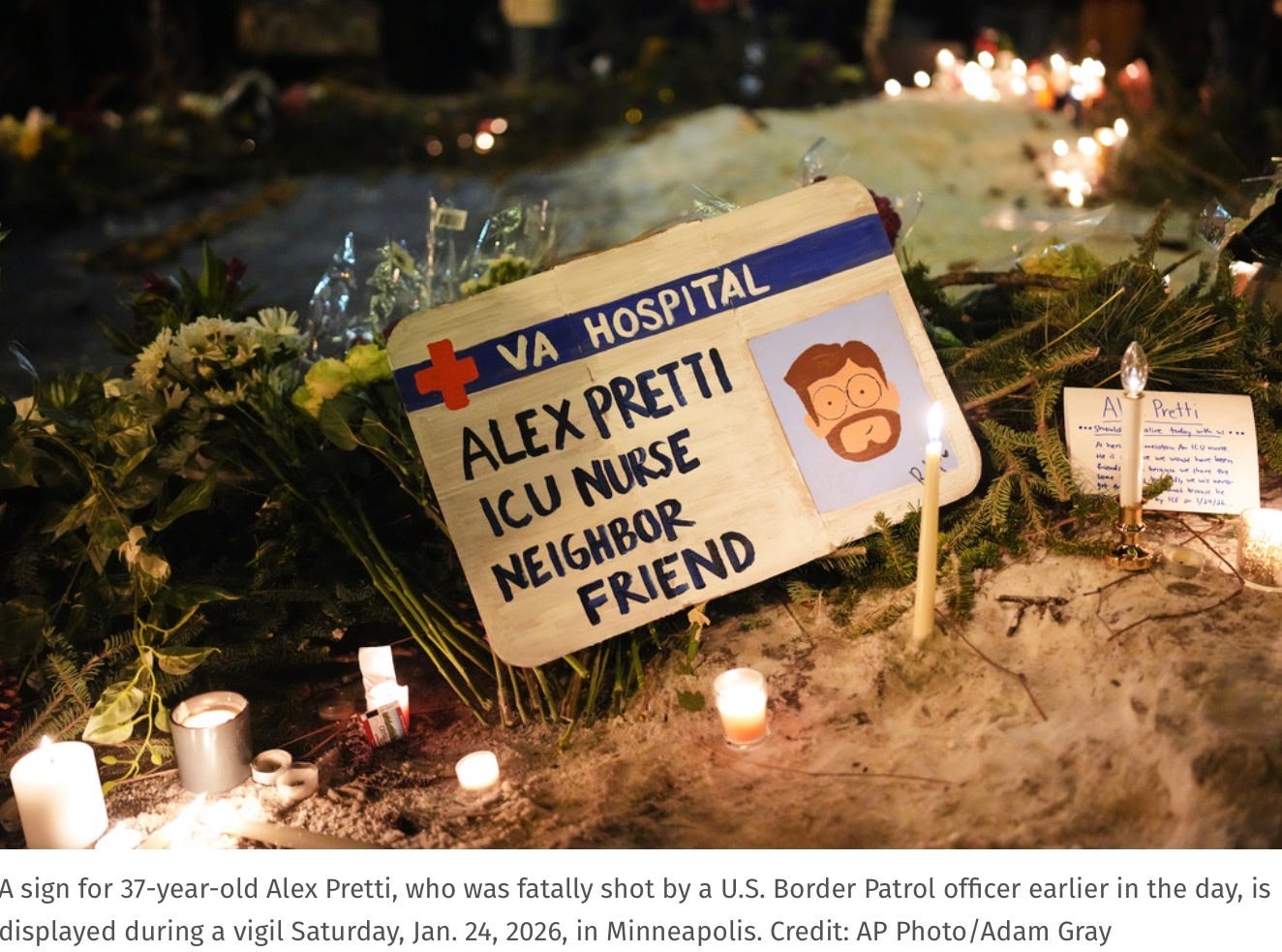
On January 24, 2026, the streets of Minneapolis offered a devastating answer to the question of who truly keeps us safe. Alex Pretti, a 37-year-old ICU nurse, was fatally shot by federal immigration agents.
Bystander video shows a man who spent his life healing others trying, in his final moments, to shield a woman from being pepper-sprayed and shoved by federal forces. In that instant, our national myths about protection were not just blurred, but bloodied. Pretti was a man protecting a woman, yes, but he was protecting her from the “protectors.”
This tragedy, coming just weeks after the fatal shooting of Renée Nicole Good by ICE agents in the same city, exposes a chilling irony. ICE claims to protect the nation, but the nation increasingly must protect itself from ICE. This is not merely about gender it’s about the instinct to shield one another from harm.
The story of Alex Pretti reveals what true protection looks like: discomfort, risk, and sacrifice. But his act of courage stood in direct opposition to a state-sponsored version of “protection” that increasingly resembles a threat. When Donald Trump vows to protect women “whether they like it or not,” he describes a protection that looks like an authoritarian impulse to dominate, whether it comes as a restrictive law, a blast of pepper spray, or the crack of a gunshot. When “protection” becomes the rationale for limiting women’s freedom, it is no longer protection, it is control.
Of course, protection isn’t owned by one gender. It belongs to people who recognize vulnerability and step toward it, placing themselves between the powerless and the cruel. Some do this in visible moments of risk. Others do it quietly every day, holding together the emotional and social fabric that allows families, communities, and even democracy itself to function.
In a recent Fox News interview, conservative commentator Allie Beth Stuckey accused women of “leading the charge for cold-blooded murder over political disagreements.” The claim is grotesque, but revealing. The moment women step beyond their prescribed roles, they are no longer seen as worthy of protection. They become the threat itself.
The logic is old and familiar. When women are quiet, selfless, and subordinate, they are “guarded.” When they speak, vote, organize, or dissent, protection turns to punishment. The once-protected woman becomes “nasty,” a “childless cat lady,” “AWFUL,” or, in Stuckey’s framing, the leaders of a “culture of murder.”
This exposes the double standard we live with: men commit the overwhelming majority of violent crimes, yet they are not condemned as a class. Women, merely for exercising civic power, are branded a collective moral danger.
If the male-protector myth matched reality, we would see men regularly confronting misogyny in their own circles, calling out abuse, and intervening when women are threatened. As educators like Jackson Katz and Tony Porter have argued for decades, true protection means challenging the systems that enable harm.
Instead, silence prevails and in the face of abuse, is not neutrality. It is permission.
We cannot cherry-pick our outrage. We cannot praise the idea of the “male protector” while ignoring that many women, and citizens, are most endangered by those who claim to guard them. There are no “yes, buts” here. If a system kills a nurse for shielding another person, it has forfeited the moral right to call itself a protector.
The claim that men protect women is collapsing because power is not the same as protection. Protection is an act of empathy, not an exercise of force. Women do not wait to be protected, and good men do not wait for permission to be humane. Good people step between cruelty and care. This is the humanity that rises when institutions fail.
If we are serious about safety, we must stop clinging to myths that flatter power and start recognizing who is actually holding the line against cruelty. It is not always those with badges or authority. It is often nurses, neighbors, and strangers on the street.
Protection is not a gender role. It is not a slogan. It is not a promise made from a podium. It is a reflex of empathy and the instinct to step toward someone being harmed. It is what communities rely on when institutions fail them.